Domain Rating Check: Vet Sources for History Resource Sites
-
Thời gian
16 thg 11, 2026
-
Lượt xem
4 lượt xem
A history teacher builds a unit on the Industrial Revolution and wants to share a few outside links with students: a digitized archive, a museum page, a blog with good timeline charts.
A history teacher builds a unit on the Industrial Revolution and wants to share a few outside links with students: a digitized archive, a museum page, a blog with good timeline charts. Before any of those links go onto a resource page, someone has to decide which ones are trustworthy. That someone is usually the teacher, a librarian, or a small team that runs an education site on the side, and there is rarely a budget for an enterprise SEO suite.
This guide walks through a simple, repeatable routine for that job using a domain strength lookup for archive and library sites. The routine works for any education publisher, but the examples lean toward history and humanities material, where the gap between a careful source and a thin copycat can be wide.
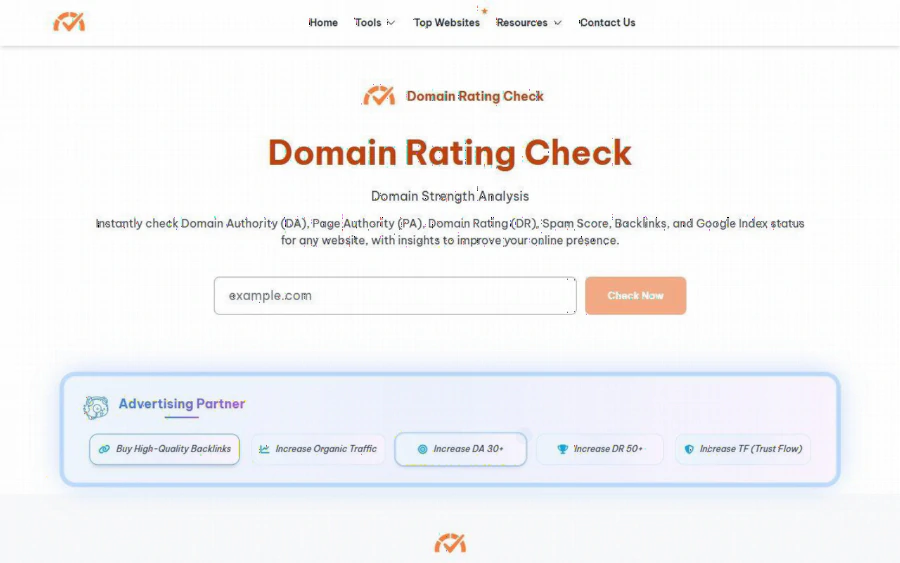
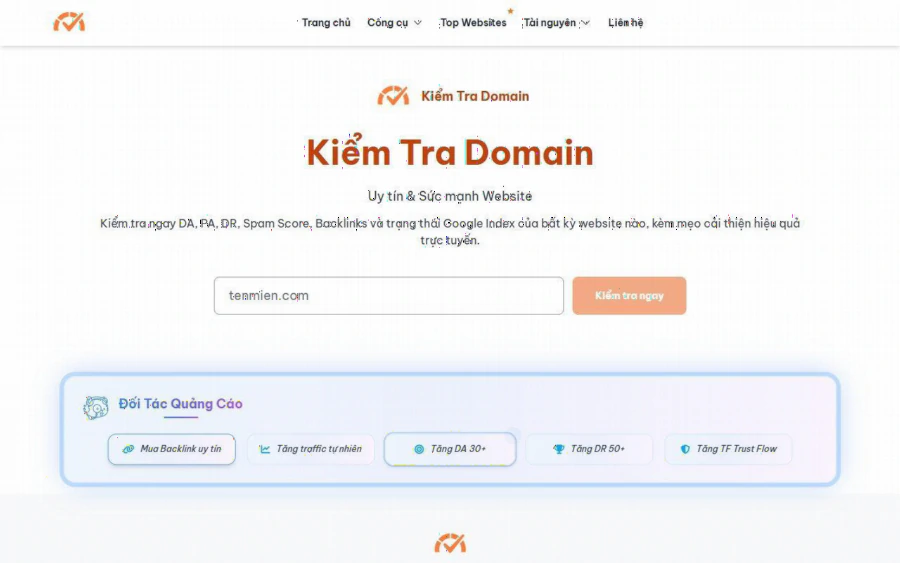
The Domain Rating Check homepage with a domain box and a Check Now button
What the tool actually does
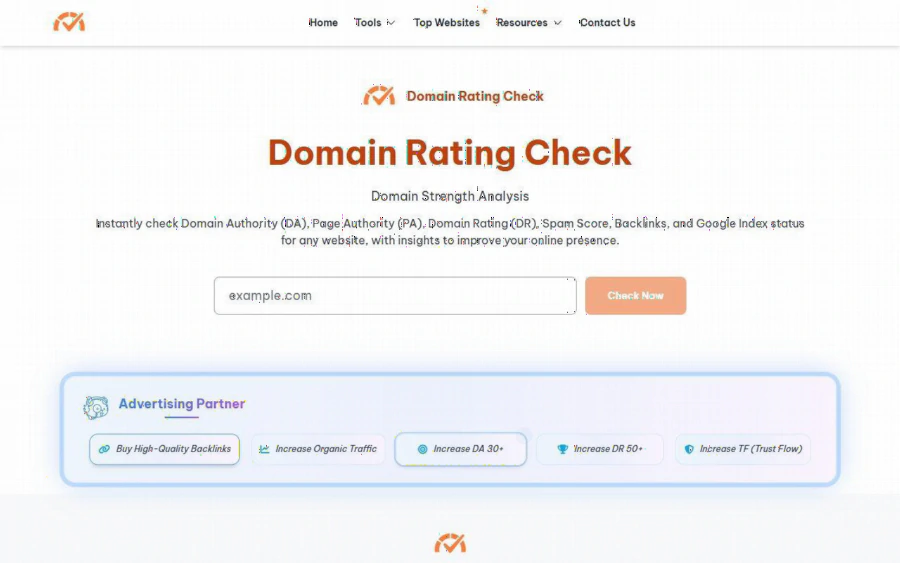
Domain Rating Check is a free web page where you type a domain, such as example.com, and press Check Now. The homepage describes it as a way to check Domain Authority (DA), Page Authority (PA), Domain Rating (DR), Spam Score, backlinks and Google index status for any website. The results are not limited to one vendor's number. The metrics listed on the page include Ahrefs Domain Rating, organic traffic, backlinks, Majestic links, Trust Flow (TF) and Citation Flow (CF), and the Tools menu points to further metrics such as referring domains, traffic value and organic keywords.
The page says analysis can take a few seconds depending on the size of the domain, and it asks you to pass a verification step before the check runs. It supports new and established domains alike. That is the whole product: one box, several scores. There is no account flow to learn, and the site does not publish a price on the pages I read, so treat any plan or limit talk you hear elsewhere as unconfirmed until you see it on the site itself.
Step 1: Write down what you want from the link
Start with the decision, not the tool. Are you deciding whether to cite a source on your own page, whether to accept an inbound link request, or whether to pay for a placement? A teacher choosing a digital archive to recommend has different needs from a site owner answering a stranger who wants a "resource" link.
For a history resource page, a short rule works well: the source must be readable by students, stable enough that the link will still work next term, and not part of a link scheme. The numbers cannot judge the first point at all, and they only hint at the other two. Keep that limit in mind.
Step 2: Run the domain through the checker
Open the DR page at Domain Rating Check, which is titled Ahrefs Domain Checker, or the homepage, and type the domain. Include the full domain name, as the homepage instructs. Complete the verification, click Check Now, and wait for the table.
On the DR page the metric list is explicit. Domain Rating is a score from 0 to 100 based only on backlinks, so by the page's own explanation it does not measure content quality, on-page SEO or traffic. Ahrefs Rank is a global rank where a lower number is better. Backlinks is the total of external links, Referring Domains counts unique linking sites, and Traffic Value estimates what the organic traffic would cost to buy through ads.
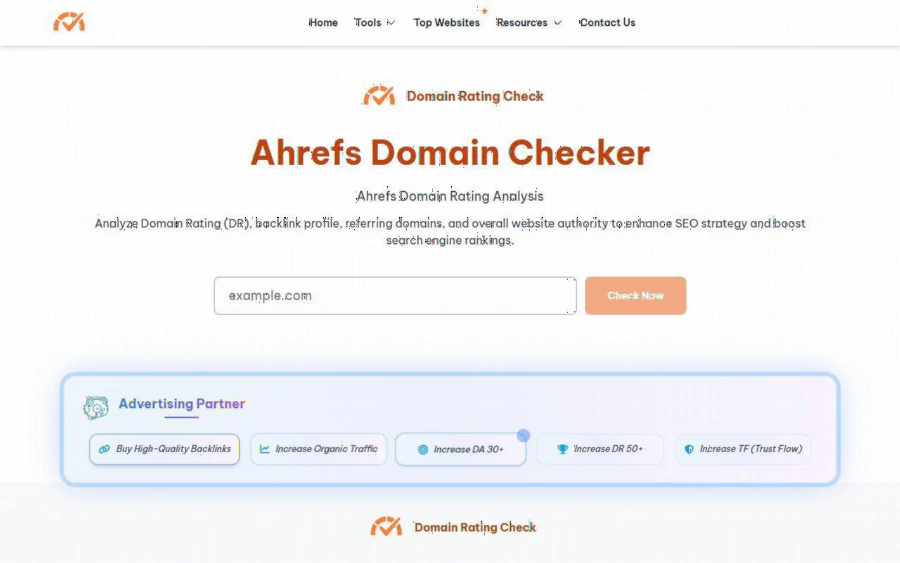
The Ahrefs Domain Checker page on Domain Rating Check with its input box
Step 3: Read the scores as a group
One number tells you little. A site can have a respectable DR because a few old links point at it while its traffic is close to zero. Another can have decent traffic and weak authority because it is new. The value of a multi-metric page is that you can set the numbers side by side.
Here is the reading order I suggest for a history or humanities site:
- DR and DA first. Both are third-party scores on a 0 to 100 scale. The site notes that Google does not use DR as a ranking factor, and that DA is Moz's estimate of ranking strength. Use them as a rough sort, not as a verdict.
- Referring domains next. Many links from a few domains is a weaker signal than links from many separate sites. For an archive or museum page you would expect a broad base of university, library and school links.
- Trust Flow and Citation Flow. The tool lists both. A big gap, with Citation Flow far above Trust Flow, is a classic hint of low quality links, though the page itself does not draw that conclusion for you.
- Spam Score. The homepage guidance says to keep spam score below 30 percent for a healthy domain. A site over that line deserves a manual look.
- Organic traffic. A live audience suggests that real people use the site. A high authority score with almost no traffic is worth a closer read.
Step 4: Open the site like a student would
Numbers are a filter, not a replacement for reading. Open the pages you plan to link. Does the article name an author or an institution? Are primary documents cited? Is the date clear? Is the page cluttered with ads or promotional boxes that have nothing to do with history?
A word of honesty about Domain Rating Check itself: its own pages carry sponsored banners and an "Advertising Partner" strip offering backlink and SEO services. That does not change what the metrics show, but it is a reminder to treat any single tool page with the same care you apply to the sites you are checking.
Step 5: Record the result in a small sheet
A shared spreadsheet is enough. Use one row per domain with columns for DR, DA, referring domains, TF, CF, spam score, the date checked, and a one-line verdict. The DR page suggests checking monthly or quarterly to track backlink growth, which fits a school calendar well: do a pass at the start of each term and re-check anything you plan to keep on a permanent resource page.
If two teachers or two librarians share the sheet, agree on thresholds in advance. For example, you might say a source needs a DR in a range your team accepts, a spam score under 30 percent, and a passing manual read. The exact cutoffs are your call, and the tool does not set them for you.
Strengths and limits, stated plainly
Strengths. It is quick, it puts several authority scores in one place, and it needs only a domain name. The explanations on the DR and DA pages are clear about what each metric does and does not mean, which helps non-specialists avoid over-reading a number. For a small team that wants a first pass on dozens of candidate sources, that speed matters.
Limits. These are third-party estimates, not facts about quality. DR ignores content entirely. A brand-new, excellent digital archive may score low simply because it is young, and a thin site with an old link history may score high. The homepage does not publish usage limits or pricing, so a heavy bulk workflow may need a different tool. The site also does not replace human judgment about accuracy, bias or age-appropriateness, which matter most in history teaching.
Who should use it, and who should skip it
It suits teachers, librarians, small education publishers and site owners who need a fast first look at a domain before linking, citing or accepting a link request. It also suits students learning how to judge websites, since the metric pages explain the vocabulary in plain terms.
It is not for people who need historical backlink graphs, rank tracking or automated bulk reports. Larger agencies will still reach for the paid suites such as Ahrefs, Moz Link Explorer or Majestic, and this page does not claim to replace them.
Getting started in five minutes
1. Pick three domains you are considering for a resource page.
2. Run each through the checker and copy the DR, DA, referring domains, TF, CF and spam score into a sheet.
3. Open each site and read two pages as a student would.
4. Mark each as keep, watch or drop, and note the date.
5. Set a calendar reminder to repeat the pass next term.
That small routine will not make a resource page perfect, but it will keep obvious low quality links out of a page that students and parents trust, and it will give you a record to point to when someone asks why a link was added or declined. For a team without an SEO budget, a clear process and a free first-pass lookup is a sensible place to begin.
Cùng chủ đề



Tranh luật nhân quả trong cuộc sống

Tranh luật nhân quả trong cuộc sống
